


Key Takeaways
- Look for pattern kippah styles in plaid this fall — they’re outpacing solid velvet in almost every size range for boys 2 to 13.
- Check the construction before you buy: a six-panel pattern kippah holds plaid lines straighter than a flat one-piece design, especially on smaller heads.
- Match plaid tones to what’s already in the closet — navy or olive plaid pairs easily with school uniforms and Shabbos clothes without looking mismatched.
- Ask about bulk pricing early if you’re ordering for a classroom or simcha — custom plaid runs need lead time, and wholesale terms vary by quantity.
- Rotate two or three plaid kippahs per kid instead of one — it cuts down on wear and keeps the pattern looking sharp longer.
- Hand wash or spot clean plaid pattern kippahs rather than tossing them in the machine — the dye lines hold up far better that way.
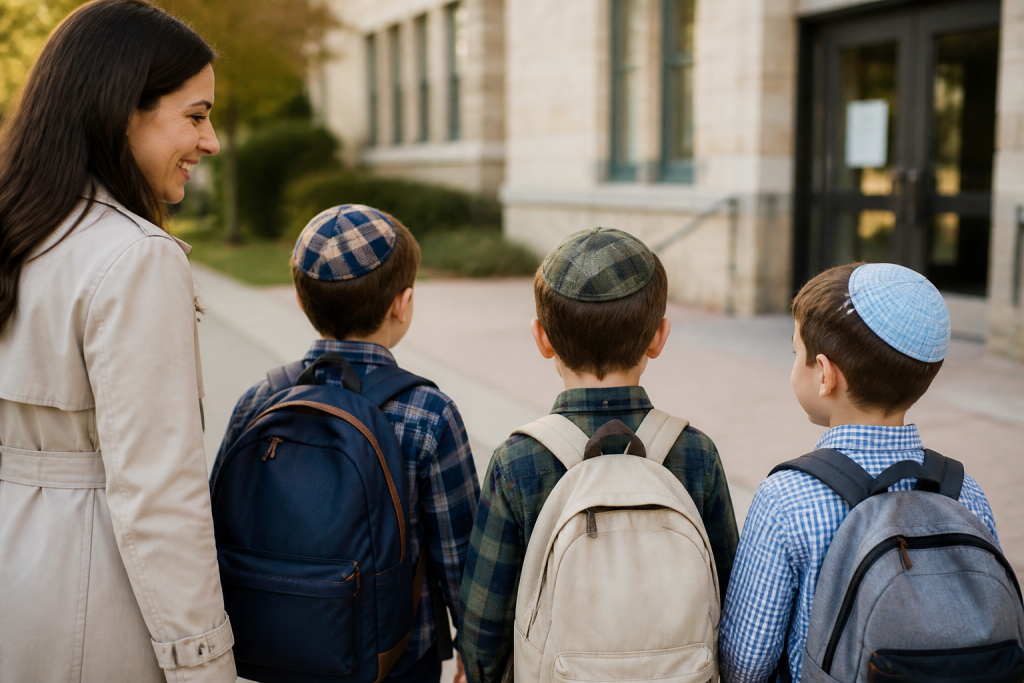
Walk into any Sunday morning drop-off line this October and count the black velvet yarmulkes. Go ahead you won’t find many. What you’ll spot instead are plaid patterns in navy and tan, olive and gray, clipped onto kids who clearly picked them out themselves. A kippah pattern isn’t a novelty item anymore. It’s become the default choice for a good chunk of families shopping for boys ages 2 to 13, and the shift has been building for a few seasons now.
So what changed? Kids want to feel like themselves at shul, not like they’re wearing a uniform piece nobody asked for. Plaid gives them that texture, color, a little personality without breaking any rules about what belongs on a head. Parents notice the difference immediately: a plaid pattern kippah photographs better, survives more wear, and gets picked up off the dresser without a fight. That’s not a small thing on a Friday afternoon with five minutes before candle lighting.
Fall’s Big Shift: Plaid Pattern Kippahs Are Outselling Basic Black Velvet
Picture a mom standing at a pickup, watching three different first-grade boys walk out in three different plaid head coverings light blue, olive, tan and not one solid black in the bunch. That’s not a coincidence. That’s what’s actually happening at drop-off lines this season. Parents are done treating head coverings as an afterthought, and they’re picking a Pattern kippah over the old standby almost automatically now.
Here’s what most people miss: plaid works because it already lives in kids’ closets. Flannel shirts, scarves, even backpacks plaid is the fall uniform. So a matching head covering doesn’t feel like a religious obligation tacked onto an outfit. It feels like part of it.
Solid velvet isn’t disappearing.
But it’s losing its grip as the automatic default. Sales data from small Judaica sellers this season shows plaid and check patterns moving faster than any solid shade, including navy and black combined.
What Actually Counts as a Pattern Kippah (And How It Differs From a Solid Yarmulke)
A solid yarmulke is one color, one texture, done. A pattern kippah is anything with a printed or woven design plaid, florals, Hebrew letters, you name it. That’s the whole difference. Once you know that, the rest of the shopping gets a lot easier.
Plaid, Plain, and Everything Between: Sorting Out the Confusion
Plenty of moms email asking whether plaid counts as a real pattern or just a texture. Plaid is arguably the most versatile pattern because it reads dressy for shul and casual for school pickup. Solid black velvet still has its place (weddings, Rosh Hashanah), but plaid gives kids something to actually get excited about wearing every day.
Six-Panel vs. Flat Construction — Why It Changes How a Pattern Reads
Construction matters more than most parents realize:
- Six-panel: breaks the plaid into segments, creating a bolder, more graphic look
- Flat construction: keeps the plaid whole, so lines stay continuous and subtle
Pick six-panel for a statement piece, flat for something quieter under a yarmulke clip.
The History Behind Plaid: From Traditional Cloth to Modern Kid Style
Ever wonder why plaid shows up on so many kippah racks the second fall hits? It’s not random. Plaid-style weaving has roots across the Middle East and North Africa, long before it became a fall wardrobe staple here. A pattern kippah in plaid connects a kid’s everyday head covering to fabric traditions that go back generations — and that’s a story worth more than a solid black velvet piece can tell.
Moroccan, Tunisian, and Persian Influences on Contemporary Patterns
Moroccan weavers favored bold geometric crossovers. Tunisian textiles leaned into deep jewel tones mixed with cream. Persian design brought in the fine-line grid work you still see today. Put those three traditions together and you basically get the modern plaid kippah a mashup, not a single origin.
How Hebrew Lettering and Plaid Got Paired Together
Somewhere along the way, designers started stitching Hebrew letters an Aleph Bais motif, a name, a blessing — right onto plaid backgrounds. The contrast works. Structured lines plus flowing script. It’s why so many parents pick plaid for school-year wear; it feels rooted, not just trendy.
Choosing the Right Plaid Pattern Kippah for Boys Ages 2 to 13
Nine out of ten moms in her circle admit they’ve bought the wrong size kippah at least once — usually too small, sliding off mid-Kiddush. That’s not a small problem when you’ve got a squirmy 3-year-old at the table. A pattern kippah only works if it actually stays put, and sizing is where plaid really shines because the visible grid pattern makes it easy to eyeball proportion against a kid’s head.
Sizing by Age and Head Shape
For toddlers 2 to 4, a compact 6-inch dome fits best smaller heads need less fabric to look right. Kids 5 to 9 usually do well with a mid-size 6-panel style, which handles thicker hair and holds a clip better. Boys 10 to 13 can wear near-adult sizing, and a flat plaid style tends to sit more naturally as their head shape matures.
Matching Plaid to School Uniforms and Shabbos Outfits
Navy or gray plaid pairs cleanly with school uniforms without breaking dress code, while a bolder tan or blue plaid works for Shabbos and simchas no stiff formality, just a look that still respects the occasion.
Custom and Wholesale Plaid Orders: What Parents and Schools Should Know
Here’s a myth worth busting: bulk buying only saves money if you order plain black. Not true. A well-run wholesale program on plaid pattern kippah styles often costs about the same per piece as solid — sometimes less, because plaid fabric gets bought in bigger rolls and wastes less during cutting. Schools ordering 50-plus for a grade, or families planning a bar mitzvah with 100 guests, should ask about custom trim, panel count, and rim color before assuming solid is the budget choice.
Bulk Discount Considerations for Classrooms and Simchas
A few practical points parents and school coordinators should nail down:
- Minimum order size for discount pricing usually 24 to 36 units
- Panel style — 6-panel plaid holds shape better for active kids than flat-cut
- Turnaround time — custom plaid runs typically need more lead time than solid stock
- Matching accessories — some families coordinate plaid kippahs with tallit trim for photos
Realistically, ordering early avoids rush fees and gives schools time to size correctly.
Caring for a Plaid Pattern Kippah So It Lasts All Season
Picture this: your son grabs his olive plaid kippah off the dresser Friday morning, and it’s been through recess, lunch, and a rainy walk home three days running. That’s real life for a pattern kippah — it works harder than a plain black velvet one sitting in a drawer for shul only. So how do you keep the plaid crisp instead of faded and floppy by Chanukah?
Three habits that actually matter:
- Spot clean, don’t soak. A damp cloth with mild soap handles most marks on cotton or linen plaid without warping the shape.
- Skip the dryer. Heat flattens the panel structure and dulls the pattern’s contrast — air dry flat instead.
- Rotate two or three in the wardrobe. One kippah wearing daily fades twice as fast as three worn in rotation.
Clips matter too a loose clip means more handling, more oil transfer from little hands, faster wear on the fabric. A snug, well-placed clip keeps the plaid pattern facing forward and out of pockets, backpacks, and washing machines by accident.
Frequently Asked Questions
What’s the difference between a kippah and a yarmulke?
None, honestly. Kippah is the Hebrew word, yarmulke is the Yiddish word, and yamaka is just how people mishear it. Same head covering, different pronunciation depending on your family’s background.
How do you pronounce kippah correctly?
It’s kee-PAH, with the emphasis on the second part. Say it too fast and it comes out sounding like “kippa” that’s fine too, don’t stress over it.
What does a pattern kippah represent?
At its most basic, a kippah represents respect and awareness, a reminder that there’s something bigger above you. A pattern kippah does the same job but lets a kid express personality while doing it. Trains, plaid, Hebrew letters, sports themes the pattern doesn’t change the meaning, it just makes wearing one every day less of a chore for a 6-year-old.
Is there a difference between Moroccan, Tunisian, and Persian kippah styles?
Yes, and it comes down to regional textile traditions. Moroccan and Tunisian designs often lean on bold embroidery and geometric needlework, while Persian and Iranian styles borrow more from arabesque and mashrabiya-inspired patterning those interlocking lattice shapes you’d recognize from Middle Eastern architecture. None of these are “more correct” than the other. They’re cultural fingerprints on the same basic head covering.
Do girls or women wear kippahs?
Traditionally kippahs are worn by boys and men, though some women in egalitarian or Reform communities choose to wear one too, especially during prayer or at a wedding. It’s not universal, and practice varies a lot by community. If you’re shopping for a female family member, check with her rabbi or community norms first.
What size kippah should I order for a young kid?
For toddlers and kids under 6, a smaller mini or 4-inch panel usually stays put better with clips. Once a kid hits 7 or 8 and has more hair to work with, a standard 6-panel size holds fine. Sizing charts on most kippah stores will walk you through head measurements if you’re not sure.
What are kippah clips and do I actually need them?
Clips are small metal or plastic pieces sewn to the underside that grip onto hair or a headband so the kippah doesn’t slide off during recess or a windy walk to shul. For younger kids especially, yes, get them. Older kids with bobby pin experience can sometimes skip them.
Can you get pattern kippahs custom-made for a bar mitzvah or wedding?
Absolutely, — it’s one of the most popular orders out there. Custom pattern kippahs let you match a color scheme, add names or dates, or coordinate a whole family or wedding party. Most stores offering custom work also do wholesale and bulk discount pricing for big events like this worth asking about before you order 100 of anything.
What fabric is best for an everyday pattern kippah?
Cotton and linen breathe well and hold up in the wash, which matters when you’ve got a kid wearing the same one five days a week. Velvet and suede look sharp but they’re really built for synagogue and special occasions, not gym class. Denim splits the difference durable, casual, and it hides dirt better than white ever will.
Do pattern kippahs have any connection to a tallit?
Not directly a tallit is the prayer shawl, a completely separate piece of ritual clothing, while a kippah is just a head covering. That said, some families like to coordinate the color or trim of a kippah with a tallit for a bar mitzvah or holiday look. It’s a style choice, not a requirement.
So here’s where this all lands. Plaid didn’t take over the fall lineup by accident it took over because it does something solid velvet just can’t. It gives a kid something to point at and say, that’s mine. Between the sizing quirks, the panel construction, and the fabric care that actually matters once a five-year-old starts rubbing his head on everything, a pattern kippah is a small purchase with a lot of moving parts. Get the fit wrong or skip the brushing routine, and even the sharpest plaid looks tired by Chanukah.
Parents shopping for one kid or a whole classroom should treat pattern choice the way they’d treat picking out a school jacket. Think about who’s wearing it every day, not just what looks good on a shelf. Check the panel style, check the weave, ask about bulk options before Simchas season sneaks up.
Next step: pull out that plaid piece already in the closet, give it a real inspection, pins, thread, shape and decide if it’s earning its spot for the rest of fall or if it’s time to shop for a fresh one.
