


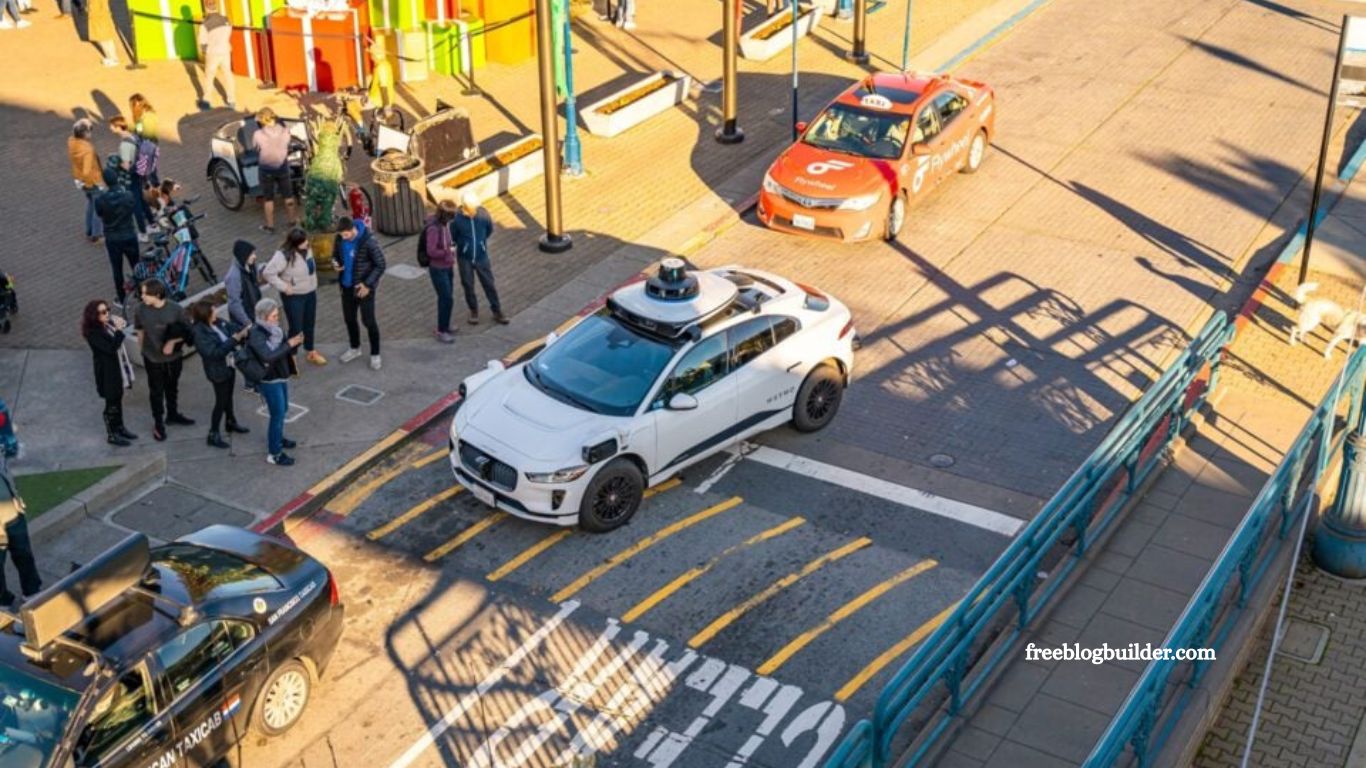
In an unusual late-night incident that highlighted lingering public skepticism toward autonomous vehicles, a group of men in San Francisco’s Marina District climbed onto stalled Waymo robotaxis and began physically interacting with the vehicles. Witnesses reported that the men sat on the cars, climbed over them, and even performed backflips off the driverless vehicles while a crowd gathered to watch and cheer. The spectacle drew city police, who eventually dispersed the group and cleared the scene.
While no serious injuries were reported, the episode underscores the challenges and public tensions surrounding the deployment of autonomous taxis in urban environments, raising questions about safety, regulation, and how communities respond to emerging transportation technologies.
Read More: Hair Loss Treatments for Women: Do They Really Work? Experts Weigh In
What Happened?
Around 2 a.m. last Sunday, ABC7 Bay Area reported that cellphone footage captured three Waymo vehicles immobilized at the intersection of Fillmore and Greenwich streets in San Francisco. Dozens of onlookers gathered as individuals climbed onto the cars and interacted with their sensors. According to ABC7, no visible damage occurred, and no passengers were inside the vehicles.
One bystander was even seen performing a backflip off a robotaxi, drawing attention from the surrounding crowd.
Selika Josiah Talbott, a veteran federal advisor on autonomous vehicle regulation, described the actions as “shocking and horrifying,” cautioning that such behavior could inadvertently influence AI systems to interpret crowds as aggressive. She added, “It’s still dangerous. The leaps these individuals were doing … if their head had hit the ground, it could have been catastrophic and illegal.” Talbott emphasized the need for law enforcement to treat these incidents seriously to send a clear message early on.
Waymo and the Bay Area: A History of Tension
This latest incident is not the first indication of friction between Waymo and San Francisco residents.
According to The Washington Post, Waymo vehicles received 589 parking citations in the city in 2024 alone for blocking traffic, violating street-cleaning regulations, and impeding emergency responders. In one notable instance, a robotaxi caused more than two hours of transit delays, including obstructing fire trucks responding to emergencies.
The tensions extend beyond minor infractions. The Guardian reported that robotaxis have been vandalized during protests against autonomous vehicles, with some being painted, set on fire, or damaged using traffic cones. These episodes reflect a growing frustration among residents who feel that their safety and equitable access to city streets are being compromised.
“At the time, the vehicle was not transporting any riders and no injuries were reported,” Waymo stated, adding that the company is “working closely with local safety officials to respond to the situation.”
From Tech Showcase to Cultural Flashpoint
San Francisco was an early adopter of robotaxis, but the city has increasingly become a proving ground for how autonomous technology interacts with people and the urban environment.
Waymo, now part of Alphabet, operates in multiple metropolitan areas—including Phoenix, Los Angeles, and Austin—and by early 2025, the company was completing over 200,000 paid rides per week.
The Marina District incident raises broader societal questions: Do robotaxis, still perceived as novelties, provoke unintended psychological responses, especially late at night? Could their cautious behavior in complex urban settings be misinterpreted, leading to frustration, confrontation, or even collective action against the vehicles? In one striking case, the crowd effectively took control.
“That was when it went wild,” Michael Vandi told Reuters, recalling a separate incident involving arson. “There were two groups of people: those who encouraged it and others who were just shocked and started filming. No one stood up. There wasn’t anything you could do to confront dozens of people.”
What Comes Next for Regulators?
Autonomous vehicle companies and regulators face challenges beyond collision avoidance and navigation—they must also account for human behavior in public spaces.
The California DMV has proposed granting itself authority to issue citations directly to self-driving firms beginning in 2026, signaling regulatory urgency. Cities may also require mandatory “social impact” testing or mandate in-vehicle safety drivers in specific zones.
Meanwhile, engineers are exploring ways for robotaxis to communicate intentions to pedestrians and manage unpredictable situations, such as being surrounded or attacked. Solutions include signaling through lights, sounds, or even mimicking human eye contact to convey awareness and intent.
Such measures could have been useful during the Marina District incident. “There was an officer who appeared and eventually sort of shooed everyone aside so the vehicle could begin to move,” Talbott told ABC7. “Even the vehicle’s hesitancy as it resumed operation was due to the intrusiveness of humans.”
So, What Now?
What began as an experiment in urban transportation is increasingly becoming a cultural flashpoint, where human expectations collide with cutting-edge technology.
Without a driver to intervene, questions arise about the safety of both passengers and the vehicles themselves when confronted by hostile or disruptive onlookers. These are challenges that even the companies behind autonomous cars may not yet have definitive answers for.
“What is becoming abundantly clear is that AV technology is not as sophisticated as the industry would like us to believe,” California State Senator Dave Cortese told Reuters.
The Marina District incident is more than a viral spectacle—it is a wake-up call. Waymo and the broader autonomous vehicle industry must navigate not only physical streets but also societal terrain, earning public trust one safe, respectful interaction at a time.
“We are seeing people reaching a boiling point over tech that they do not want and does not make their lives better,” said Missy Cummings, director of the George Mason University Autonomy and Robotics Center and a former adviser to U.S. traffic safety regulators.
Correction: A previous version of this article misstated that ABC7 News captured footage of the stalled Waymo vehicles; the station was actually reporting on cellphone video.
Frequently Asked Questions (FAQs)
What happened in the Marina District involving Waymo robotaxis?
In the early hours of a Sunday morning, several individuals climbed onto stalled Waymo vehicles, interacted with their sensors, and even performed backflips off the cars. No passengers were inside, and no serious injuries were reported.
Were the Waymo vehicles damaged?
According to reports, no visible damage occurred during the incident. Waymo confirmed that the vehicles were not transporting riders at the time.
Why did people react this way to robotaxis?
Experts suggest that the novelty of autonomous vehicles, combined with the vehicles’ cautious behavior in complex urban settings, may provoke curiosity, frustration, or even confrontation among pedestrians.
Have there been previous incidents involving Waymo in San Francisco?
Yes. In 2024, Waymo vehicles received 589 citations for parking and traffic violations. There have also been incidents of vandalism during protests against autonomous vehicles.
How are regulators responding?
California’s DMV has proposed the authority to issue citations directly to self-driving firms starting in 2026. Cities may also require “social impact” testing or safety drivers in certain zones to ensure public safety.
What steps are companies taking to prevent such incidents?
Vehicle designers are experimenting with signaling systems, including lights, sounds, and behaviors that mimic human communication, to better indicate intentions to pedestrians and manage unpredictable situations.
Conclusion
The Marina District incident underscores the complex intersection of technology, society, and urban life. Autonomous vehicles like Waymo’s robotaxis promise to transform transportation, but they also expose gaps in public understanding, regulatory frameworks, and vehicle design. Incidents like this highlight the need for thoughtful regulation, clear communication, and careful integration of driverless technology into communities.