


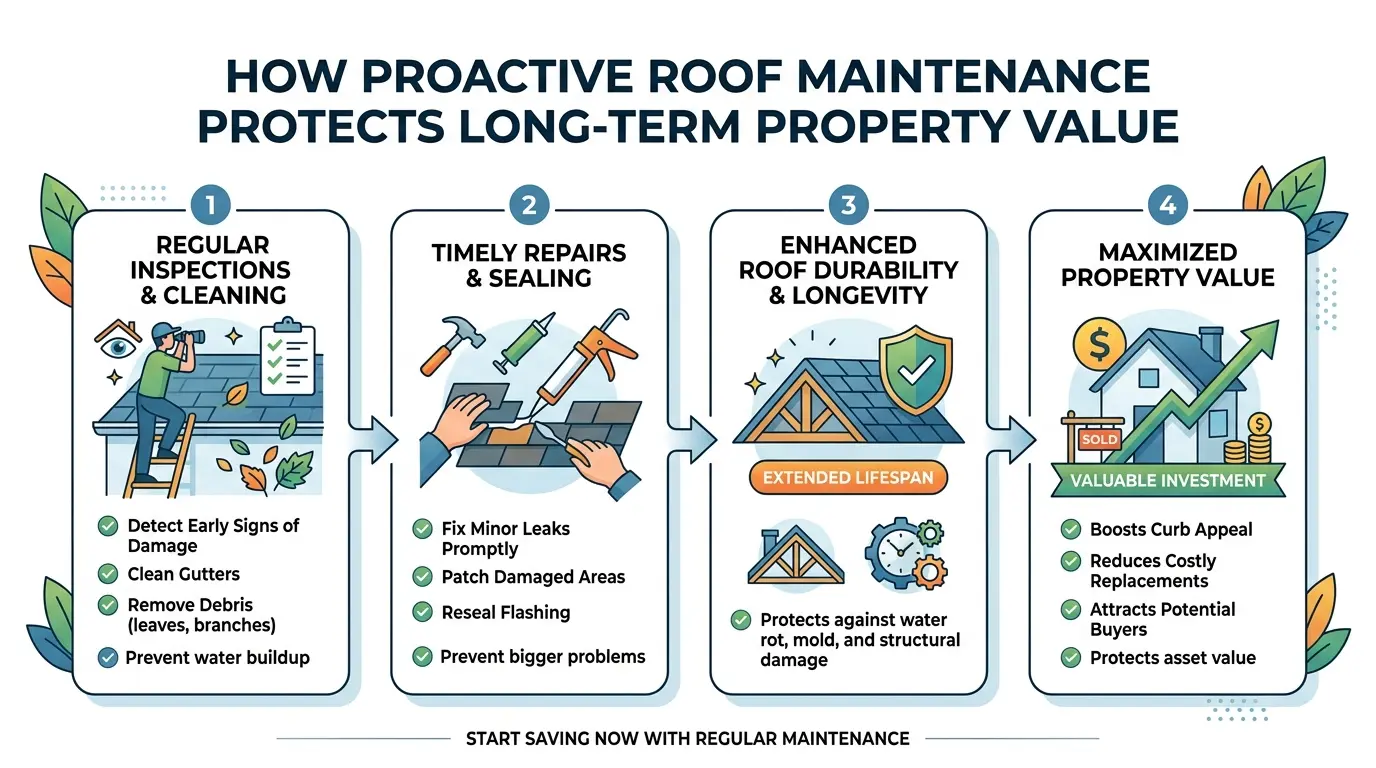
A roof is one of the most important structural components of any home or commercial property, yet it is often overlooked until a major problem appears. Small issues like loose shingles, minor leaks, or clogged drainage systems can quietly develop into expensive repairs when left untreated. Property owners who take a proactive approach to roof maintenance are more likely to preserve their building’s value, avoid sudden repair costs, and extend the lifespan of their roofing system.
Routine roof care is not just about appearance. It directly affects energy efficiency, structural stability, and even indoor comfort. Whether managing a family home or a commercial facility, understanding the long-term benefits of consistent roof upkeep can help property owners make smarter decisions over time.
Why Roofing Problems Escalate Quickly
Many roofing issues begin subtly. A single cracked shingle or damaged flashing section may not seem urgent at first glance, but weather exposure can rapidly worsen the situation. Moisture intrusion is especially problematic because it often spreads beneath the surface before becoming visible indoors.
Common issues that can grow into major repairs include:
- Water pooling after storms
- Missing or damaged shingles
- Blocked gutters and drainage systems
- Cracked flashing around vents or chimneys
- Mold or algae growth
- Weak spots caused by prolonged sun exposure
Because roofs are continuously exposed to environmental stress, even minor wear can compromise the integrity of the entire system. Seasonal temperature changes, heavy rainfall, and strong winds all contribute to gradual deterioration.
The Financial Benefits of Preventive Maintenance
One of the biggest misconceptions among property owners is that roof maintenance is an unnecessary expense. In reality, preventive care often saves significant money over the life of the roof.
Small repairs are generally far less expensive than emergency replacements or structural restoration projects. A neglected leak, for example, can eventually damage insulation, drywall, electrical systems, and framing. The longer the issue remains unresolved, the more costly the repairs become.
Preventive maintenance also helps:
Extend Roof Lifespan
Most roofing materials are designed to last for decades, but only when properly maintained. Regular inspections and timely repairs can maximize the life expectancy of shingles, tiles, metal panels, or flat roofing systems.
Improve Energy Efficiency
Damaged roofing systems can allow air leaks and poor insulation performance, forcing HVAC systems to work harder. A properly maintained roof helps regulate indoor temperatures more effectively, reducing monthly energy costs.
Protect Property Resale Value
Potential buyers pay close attention to roof condition during inspections. A well-maintained roof signals responsible ownership and reduces concerns about future repair expenses.
The Importance of Professional Roof Inspections
While some visible issues can be identified from the ground, many roofing problems require trained assessment. Professional inspections help uncover hidden damage before it becomes severe.
A comprehensive inspection often includes:
- Checking shingles or roofing materials for wear
- Evaluating flashing and sealants
- Inspecting attic ventilation
- Looking for moisture intrusion
- Examining drainage performance
- Assessing storm-related damage
Scheduling inspections at least once or twice a year can significantly reduce the likelihood of unexpected roofing emergencies.
For property owners seeking reliable information about roofing systems, maintenance practices, and repair considerations, Ideal Precision offers additional context on roofing solutions and long-term property protection.
Weather Conditions and Roof Durability
Climate plays a major role in roof performance. Properties located in areas with heavy storms, prolonged heat, or high humidity often experience faster roofing deterioration than buildings in milder environments.
Heat and UV Exposure
Constant sun exposure can weaken roofing materials over time. Asphalt shingles may become brittle, while sealants and adhesives can dry out and crack.
Rain and Moisture
Water intrusion remains one of the most damaging roofing threats. Poor drainage or unnoticed leaks can encourage mold growth and wood rot.
Wind Damage
Strong winds can loosen shingles, expose underlayment, and create entry points for moisture. Even moderate storms may weaken roofing structures if vulnerabilities already exist.
Understanding how local weather conditions affect roofing materials can help property owners choose better maintenance schedules and repair priorities.
Signs a Roof May Need Immediate Attention
Some roofing problems should never be ignored. Delaying repairs may increase the risk of structural damage or interior issues.
Watch for these warning signs:
- Water stains on ceilings or walls
- Sagging roof sections
- Missing shingles after storms
- Excessive granule loss in gutters
- Mold growth near the roofline
- Persistent drafts or insulation issues
- Rising energy bills without explanation
Early detection is one of the most effective ways to reduce long-term repair costs.
Choosing the Right Roofing Approach
Every property has different roofing needs based on size, design, materials, and environmental exposure. Some buildings benefit from periodic repairs, while others may eventually require partial or full replacement.
Factors that influence roofing decisions include:
- Age of the roof
- Frequency of previous repairs
- Ventilation quality
- Structural integrity
- Budget considerations
- Local climate conditions
Rather than waiting for visible failure, many property owners now adopt long-term roofing strategies focused on maintenance planning and gradual upgrades.
Long-Term Value Starts with Consistency
Roofing systems are designed to protect everything beneath them, but they require ongoing attention to perform effectively over time. Consistent maintenance, timely inspections, and early repairs can significantly reduce the likelihood of major structural problems while preserving overall property value.
Property owners who stay proactive often experience fewer emergencies, lower repair costs, and better long-term performance from their roofing systems. Even simple maintenance habits can make a measurable difference over the years.
By treating roof care as an investment rather than an afterthought, homeowners and commercial property managers can better protect their buildings from avoidable damage and costly disruptions.
