


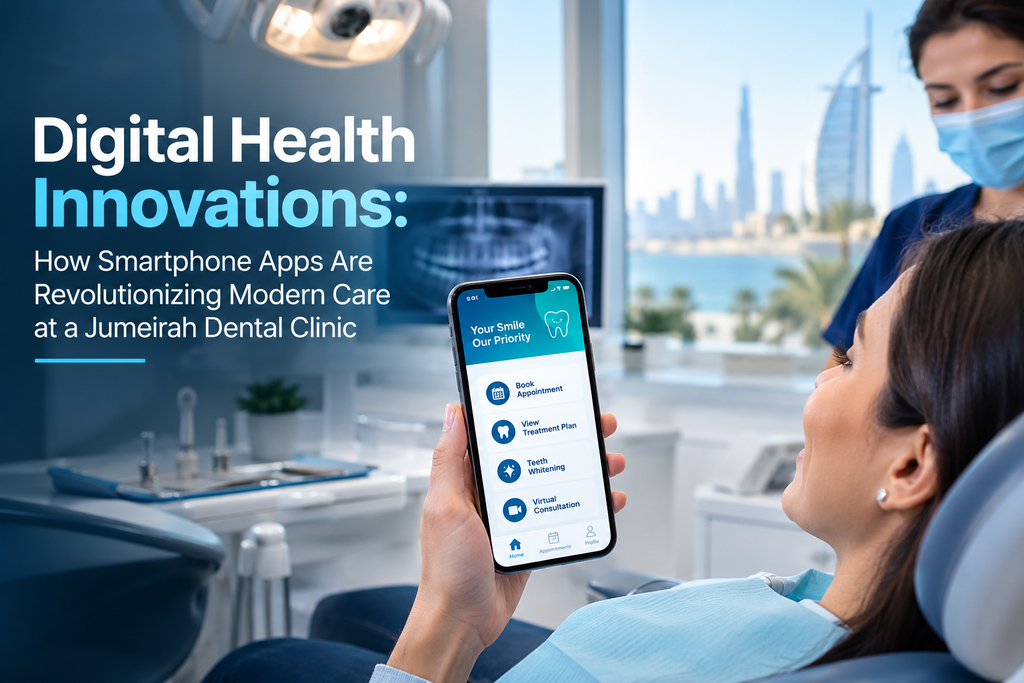
The rapid evolution of mobile technology has reshaped healthcare delivery, transforming how patients interact with clinical environments. Today, smartphones serve as powerful hubs for personal health management, bridging the gap between home monitoring and clinical diagnostics. Within specialised outpatient environments, such as a premier jumeirah dental clinic, digital tools are actively refining every phase of patient care. From automated triaging and real-time aligner tracking to high-definition mobile imaging, smartphone apps are driving higher precision, shorter chair times, and unprecedented convenience in oral health.
Mobile Teledentistry and Asynchronous Diagnostic Triage
One of the most impactful developments in digital dentistry is the integration of asynchronous teledentistry into smartphone applications. Asynchronous communications, often referred to as “store-and-forward” technology, allow patients to capture photos or short video clips of localized dental issues—such as minor soft tissue lesions, chip damage, or localized swelling—using high-resolution mobile cameras.
Wikipedia
These visual files are transmitted through encrypted, regulatory-compliant patient portals directly to clinical databases. Advanced imaging software built into mobile platforms guides patients on framing, lighting, and focal depth to ensure the captured photos meet clinical standards for diagnostic review.
Dentists at a modern dental clinic can evaluate these submissions prior to an in-person visit. This pre-assessment workflow enables practitioners to:
- Determine whether a situation requires immediate emergency intervention or can be scheduled as a routine check-up.
- Prepare specific specialized instruments, operative suites, or digital hardware in advance.
- Provide accurate advice on temporary pain relief or stabilization before the patient sets foot in the facility.
By triaging patients remotely through mobile applications, clinics reduce unnecessary travel time for non-urgent consultations while ensuring urgent cases receive swift prioritized attention.
Smartphone-Connected Orthodontic and Alignment Monitoring
Orthodontics has seen a dramatic shift toward digital remote monitoring. Clear aligner therapy traditionally required frequent in-office evaluations to confirm that tooth movement matched simulated treatment trajectories. Mobile app ecosystems have transformed this process by allowing patients to perform routine progression scans at home using specialized hardware attachments that fit onto standard smartphones.
Teledentix
These attachments align the phone’s camera lens with intraoral retractors, enabling the patient to capture structured 360-degree scans of their arch alignment. The mobile app utilizes artificial intelligence and computer vision algorithms to evaluate tooth movement against the initial 3D digital model.
If the software detects proper fit and space creation, the system approves the transition to the next aligner set. Conversely, if a tracking error or unpredicted rotation occurs, the platform alerts the attending orthodontist at the jumeirah dental clinic, who can pause treatment or request an in-person visit. This dynamic monitoring protocol prevents aligner misfit issues from compounding, reduces total chair time, and offers patients real-time feedback on their treatment progress.
Intraoral Mobile Camera Integration and Patient Education
Patient communication historically relied on two-dimensional static X-rays, which can be difficult for non-specialists to interpret. Modern intraoral camera systems now connect wirelessly to clinical mobile tablets and smartphone interfaces, offering high-definition live streaming inside the oral cavity.
During a diagnostic examination, a dentist uses handheld intraoral optical wands that broadcast real-time video feeds over secure Wi-Fi or Bluetooth protocols directly to an interactive mobile screen. High-resolution sensors capture microscopic enamel cracks, marginal leakage around older restorations, and early-stage interproximal plaque buildup.
Visualizing these conditions live on a tablet or smartphone display changes patient education significantly:
- Interactive Visualization: Patients see exact areas of concern magnified in full color rather than interpreting abstract radiographic shadows.
- Co-Diagnosis: Clinicians can draw directly on the screen, highlighting subgingival inflammation or occlusal wear to explain proposed interventions clear and transparently.
- Digital Archiving: Comparative photos captured before and after treatments are saved instantly to the patient’s mobile account, creating a transparent, long-term record of oral health improvements.
Mobile Application Portals and Secure Data Transfer
Beyond direct clinical diagnostics, smartphone applications streamline administrative and records management tasks that directly impact the overall patient experience. Modern mobile dental platforms consolidate scheduling, pre-procedure medical questionnaires, consent documentation, and digital payment systems into a unified interface.
Medical data security protocols ensure that intraoral imagery, 3D CBCT volumetric scans, and personal health histories transferred through mobile networks are encrypted. Patients can view their comprehensive treatment history, track active healing phases following oral surgery, and receive push notifications reminding them of upcoming preventative maintenance appointments or post-operative care routines.
This centralized access reduces paperwork overhead, minimizes administrative delays, and ensures that critical patient data is instantly available to specialists during interdisciplinary treatment planning.
The Future of Mobile Technology in Dental Practice
As mobile hardware capabilities expand, the line between remote digital health and in-office dental care will continue to blur. Future mobile applications are poised to integrate advanced augmented reality (AR) tools that allow patients to preview potential cosmetic smile reconstructions directly on their screens before undergoing procedures. Furthermore, smartphone-connected biosensors capable of analyzing salivary biomarkers for early signs of periodontal disease or systemic inflammation represent the next frontier in preventive oral care.
By blending high-tier clinical expertise with mobile technology, a forward-looking dental clinic can deliver precise, efficient, and patient-centered care. Integrating smartphone apps into daily operations transforms routine visits into seamless, tech-enabled healthcare journeys that prioritize preventive wellness and long-term oral health.
