


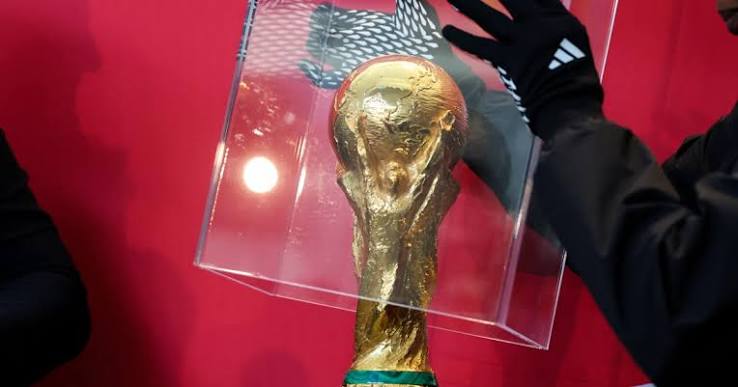
World Cup 2026 is the biggest men’s World Cup ever staged: 48 teams, 104 matches and 16 cities across three countries, all squeezed into 39 days from 11 June to 19 July. For viewers who follow full games rather than just scorelines, those numbers are not just trivia; they explain why certain teams rotate more, why travel and climate matter, and how you should interpret performance trends over a longer, denser tournament than anything we have seen before.
How Big This World Cup Really Is
The headline figure is the jump from 32 to 48 teams. That expansion produces a record 104 matches—72 in the group stage and 32 in the knockouts—making 2026 the largest World Cup in the competition’s history by both participants and total games. The calendar runs from 11 June, when Mexico open at the Estadio Azteca, to 19 July, when the final is played at New York New Jersey Stadium (MetLife), compressing those 104 fixtures into 39 days.
For live match viewers, this scale has clear consequences. Finalists will play eight games instead of the traditional seven, quarter‑finalists six rather than five, and almost every squad will traverse at least two climate bands and time zones as they move through the tournament. When you watch group matches and see coaches rotate heavily or manage intensity more carefully than in previous editions, this expanded load is the structural cause sitting behind those choices.
Three Hosts, 16 Cities And A Very Long Map
Another key stat is “3–16–11–3–2”: three host nations, 16 host cities, with 11 in the United States, three in Mexico and two in Canada. Most of the 104 matches—78 by some counts—will be played in US stadiums, with Canada and Mexico each staging a smaller but still significant share, including the historic opener in Mexico City.
The raw geography matters when you watch matches back‑to‑back. Distances between venues range from the cool, coastal climate of Vancouver to the heat and humidity of Miami, roughly 4,500km apart. That makes travel and recovery a major hidden variable behind the tempo you see on screen: a side playing its second group game after a long flight and a climate shift may intentionally adopt a more controlled block or lower pressing height, not because it lacks ambition, but because the tournament’s map forces them to ration energy.
48 Teams, 12 Groups And A Round Of 32
The core structural change is the format: 48 teams are split into 12 groups of four, with each team playing three matches before the knockout picture is drawn. The top two in each group (24 teams) plus the eight best third‑placed finishers (out of 12) advance, creating a new round of 32 before the more familiar last‑16, quarter‑finals, semi‑finals and final.
This produces a simple but important statistic: 32 of 48 teams—two‑thirds—will reach the knockouts, up from 16 of 32 (half) in previous editions. For live match interpretation, that shifts the risk profile in the group stage. A heavily favoured team can survive an early slip and still advance via third place, which might encourage more measured, rotation‑heavy line‑ups in some fixtures, while mid‑tier sides must think not only about points but also goal difference and cross‑group third‑place tables when deciding whether to protect a draw or chase an extra goal.
Confederation Slots And What They Tell You About Styles
The qualification breakdown is another stat that shapes what you see on the pitch. The 48 slots are spread across confederations roughly as follows: 16 from UEFA (Europe), 9 from CAF (Africa), 8 from AFC (Asia), 6 from CONMEBOL and CONCACAF combined (excluding the three automatic host places), plus 1 from OFC and 2 from inter‑confederation play‑offs. That distribution has already produced four first‑time finalists—Cabo Verde, Curaçao, Jordan and Uzbekistan—while also increasing representation from Africa and Asia compared with the 32‑team era.
For viewers, more African and Asian teams mean more variety in pressing heights, block structures and transition strategies across the group stage. You’ll see compact defensive blocks and vertical, counter‑centric sides share space with possession‑heavy units and hybrid pressing teams. When you tune into a random game, the odds are higher than ever that you are watching a tactical match‑up you have not seen often at past World Cups, which is part of the appeal of tracking performance trends over the full 104‑match sample rather than just following the biggest names.
Individual Milestones: Six-Time Veterans And Historic Venues
Some of the most striking pre‑tournament stats are individual. Lionel Messi, Guillermo Ochoa and Cristiano Ronaldo have all reached a record sixth World Cup, surpassing the previous mark of five held by several legends; by 2026, they stand alone in that category. At the same time, Estadio Azteca in Mexico City becomes the first stadium ever to host matches at three different men’s World Cups (1970, 1986 and now 2026), another historical first.
When you watch those matches, understanding these milestones helps you frame what you are seeing. A 39‑year‑old Messi managing his work‑rate differently, or Ochoa marshalling a back line for a sixth tournament, is not just another veteran performance; it is the culmination of unprecedented longevity in a World Cup that is itself stretching players physically more than any previous edition. Similarly, seeing the Azteca host an opener again connects the present tournament visually and emotionally to tactical eras from half a century apart, which can deepen how you read game rhythm and atmosphere.
H3: World Cup 2026 In Five Core Numbers
| Metric | 2026 value and context |
| Teams | 48 teams, first time above 32. |
| Total matches | 104 games across 39 days. |
| Host nations & cities | 3 hosts (USA, Mexico, Canada), 16 cities (11–3–2 split). |
| Group format | 12 groups of 4; top 2 + 8 best thirds reach round of 32. |
| Tournament dates & venues | 11 June–19 July; opener at Azteca, final in New York New Jersey. |
Anchoring these figures in your mind makes it easier to contextualise everything you see once the football starts.
How These Stats Should Shape The Way You Watch
If you treat these numbers as background noise, you risk misreading what unfolds on the pitch. Knowing that teams might play eight matches in 39 days, for example, changes how you judge a coach who rotates heavily in group game two or chooses a more conservative pressing plan in a hot venue after a long flight. Understanding that two‑thirds of teams reach the knockouts should make you pay attention to third‑place tables and goal differences, not just simple win–draw–loss records, when you assess whether a draw is “good enough” in a given game.
Finally, appreciating how many new teams and extra slots each confederation has gained can sharpen your eye for tactical diversity. A match between a debutant and a mid‑tier European side is not a throwaway fixture but a micro‑lab for contrasting approaches to pressing, transition and in‑game management. If you watch with those structural and statistical layers in mind, the opening weeks of World Cup 2026 become more than a countdown to the knockouts—they turn into a 72‑game study of how modern international ดูบอลออนไลน์ โกลแดดดี้. behaves under the unique pressures of the biggest World Cup yet.
